The meeting: understanding before proposing
Everything begins before the menu. The first step is a real dialogue: tastes, expectations, event style, timing, small “musts” that must be respected and what instead can be built together. It’s in this phase that food & beverage become a project, not a list of courses.
The approach is simple: listening, proposal, refinement. Personalization is not a claim: it’s the natural consequence of an operational synergy between those who organize and those who live the event, with a clear objective – creating dishes and cocktails consistent with the couple’s desires and identity.
The aperitif: the first taste of what’s to come
The aperitif is the narrative opening: it must welcome, put at ease, immediately convey the level of the experience. Two levers come into play here: immediacy (readable flavors, clean execution) and detail (presentation, service rhythm, small iconic stations). Among the solutions that work best in a wedding context are curated finger food and dedicated corners, like a caviar corner inserted naturally into the welcome flow.
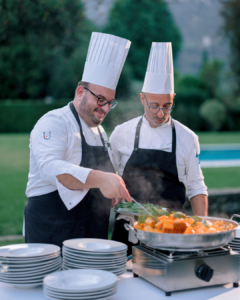
When the concept allows it, the raw material also becomes gesture: a typical example is raw fish enhanced with express service and striking scenography (ice, cut on the spot). It’s that type of choice that communicates “freshness and innovation” without the need for superstructures.
The reception: the heart of the experience
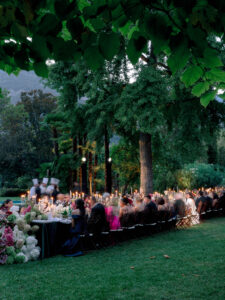
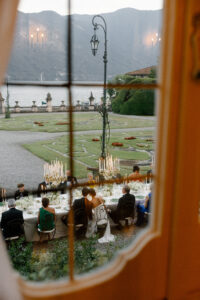
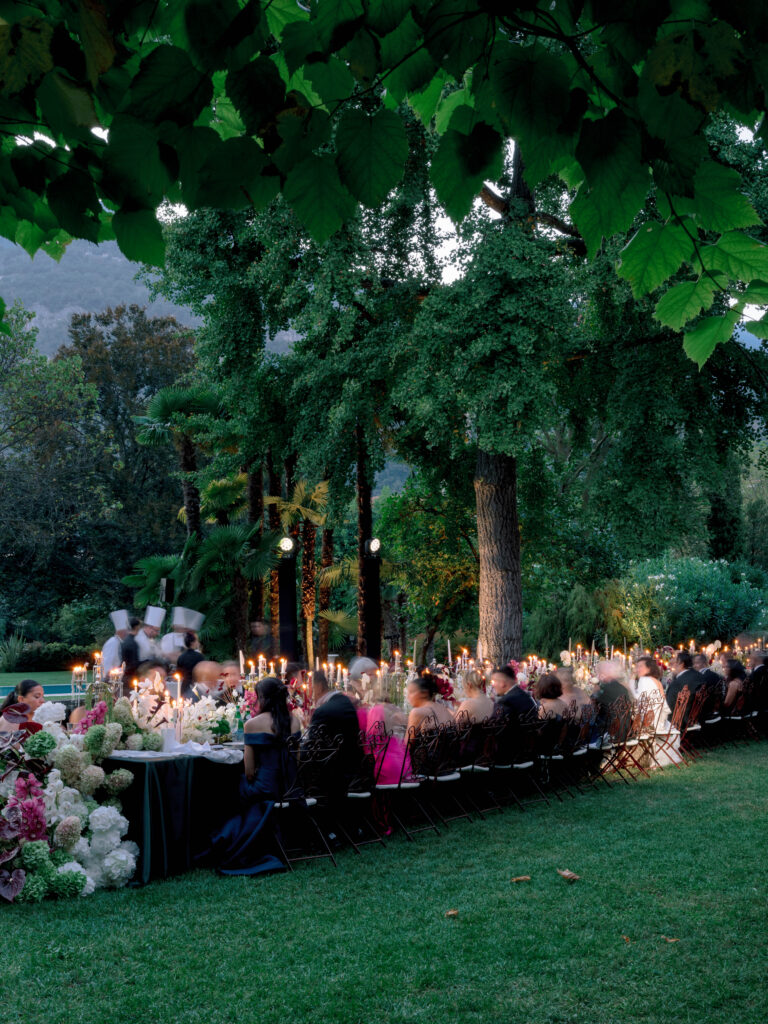
Dinner is where everything must hold: taste, timing, energy in the room. The method here is rigor and fluidity together, which passes through precise service, natural transitions between moments, attention to guest comfort. And finally the beverage component doesn’t just accompany, it gives rhythm, prepares the party and sustains the evening until late.
The typical story of a Spuma reception includes a clear progression: from aperitif to dinner, to the cake moment and the party, with cocktails built for the occasion. In some weddings, the passage “from cake to party” is amplified by a scenographic moment, which becomes the emotional threshold of the evening and opens to the bar, which enters its full role with drinks consistent with the food element and constant service.
When the event requires complete direction, the banqueting extends with the same “end-to-end” care: aperitif, dinner, cake and also the possible late-night final moment, with a curated wine selection and a mise en place that sometimes dialogues with the space without overpowering it, other times becomes the protagonist with a nod to design elements.
Iconic locations, different stories
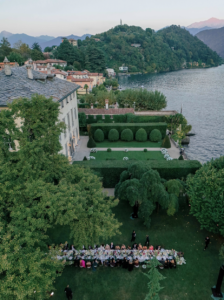
The interesting point is that the method holds up on different scales. It can be an intimate wedding, with few guests and an intimate imprint, or a larger celebration, where mixology becomes a service infrastructure: drink lists designed ad hoc to reflect the couple’s style and tastes, dedicated teams, sustained rhythms.
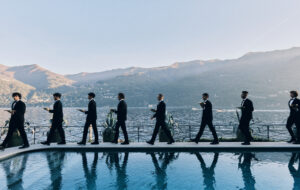
When the scenario is truly “iconic” and complexity rises, the operational structure adapts: selection and coordination of large teams to guarantee a high-level cocktail experience on large numbers, without losing perceived quality.
A “Spuma wedding” is a journey built with method: understanding before proposing, opening with an aperitif that defines the style, sustaining the dinner with service and rhythm, and closing with a party supported by mixology designed to measure, from beginning to end.