They say that the way to a man’s heart is through his stomach. And to a fashion enthusiast’s too, apparently. In recent years, in fact, many brands have started a series of silent – and then increasingly invasive – incursions into other sectors of consumer culture.
This mix of fashion and everyday consumer choices allows companies to pervade aspects of our lives that would otherwise be inaccessible to them. And what is more popular and universal than food, which we savor and purchase over and over again throughout the day? Although for many years high fashion seems to have carried out a sort of undeclared crusade against food by promoting aesthetic standards that are not always realistic, nor healthy, these two worlds have often crossed paths in the past. This is confirmed, for instance, by the numerous collections inspired by the world of cuisine, an ever-present theme that was addressed in a major exhibition titled Fashion & Food and hosted by The Museum at FIT in 2023: over 80 garments and accessories designed by Chanel, Moschino, and Stella McCartney, just to name a few. If it is true that we all dress and eat on this planet, each of us according to our own tastes and means, fashion and cuisine share many practical aspects and methods of consumption that range from the seasonality of clothes and recipes to the quality and sophistication of raw materials, expressing important aspects of the cultural heritage of the countries of origin and often contributing greatly to their socioeconomic development. Dolce & Gabbana has linked its image to the Italian culinary tradition since its foundation between Sicilian cannoli and local markets, while other brands and designers that have exploited the universal appeal of food for collection launches, fashion shows and ad hoc projects, such as Karl Lagerfeld who in 2014 set up a fashion show inside a Chanel-branded supermarket. That same year, for his debut at Moschino, Jeremy Scott played with the iconography of pop culture food brands, first and foremost the American giant McDonald’s, which had already made its debut in the world of high fashion in the 1970s by asking stylist Stan Herman – known worldwide for his cutting-edge corporate uniforms – to design the new outfits for its employees.
Fashion and Food: Brand Strategies from Streetwear to Haute Cuisine
While nowadays streetwear keeps establishing inviting collaborations with fast food chains and large-scale retail brands, such as the Nike SB x Ben & Jerry’s Chunky Dunky sneakers or the limited-edition Supreme x Oreo, high fashion seems to prefer to associate its brand identity with the sophistication of haute cuisine, which often intertwines with the world of luxury hospitality, a growing sector in the high-spending consumer segment. In this area, Italy has set a precedent: over twenty years ago, Japanese chef Nobu Matsuhisa agreed to place his first sign on Italian soil, precisely in Milan, with the complicity of Giorgio Armani. Among the French competition, however, Chanel was among the first to pave the way for these trendy culinary experiences with the Beige restaurant, curated by French chef Alain Ducasse and located on the top floor of the building that houses the Japanese headquarters of the maison in Ginza, Tokyo, in 2004.
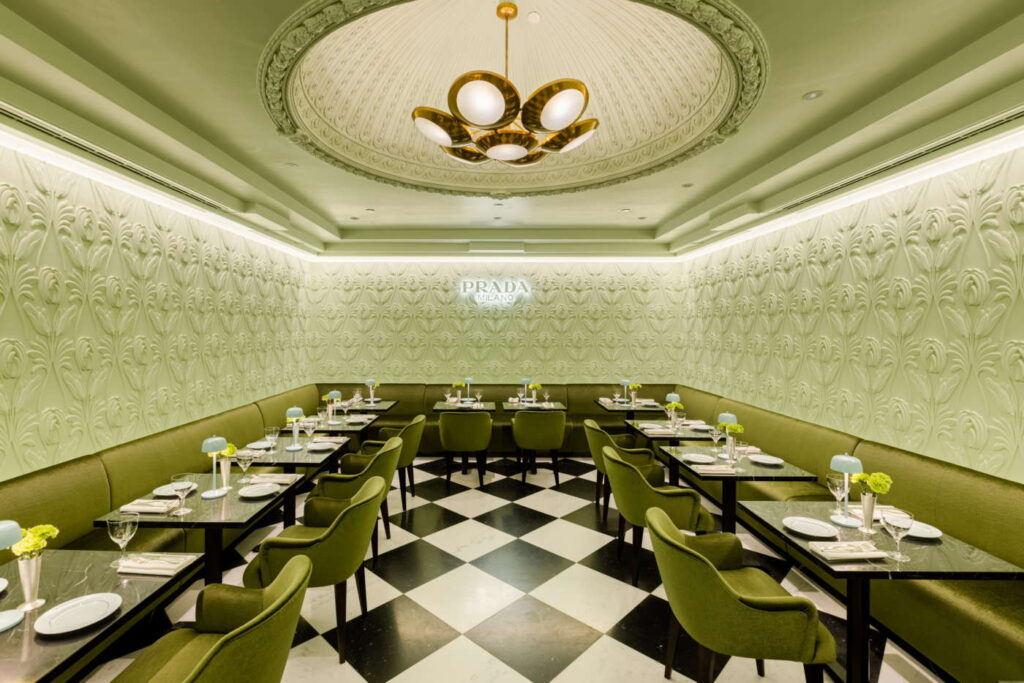
The strategy is now consolidated: designers and fashion companies all over the world are placing their names next to those of renowned chefs on the international scene to reflect the brand’s quality and finesse in the dish. First and foremost Gucci with the Gucci Osteria curated by Massimo Bottura that is expanding from Florence to the USA and Asia, and Bulgari that has brought the gastronomic research of the three Michelin Star chef Niko Romito to the restaurants of its hotels scattered around the world, from Beijing to Rome; Giancarlo Perbellini designed the menu of the Trussardi restaurant and café in Piazza della Scala, Milan, until its final closure in 2024, while Prada entrusted the young chef Lorenzo Lunghi with the leadership of the brigade at the Torre restaurant, on the sixth floor of the Fondazione Prada.
Fashion Brands and Pastry: The Power of Experiential Marketing
This trend not only shows no signs of abating, but seems more flourishing than ever, also contaminating the world of pastry making and the more relaxed and less pretentious environments of cafés and tea rooms. A trailblazer in this sense was Ralph Lauren, who opened his first Ralph’s Café in 2014 and has since exported the concept all over the world, including Italy. In the same year, the historic Milanese pastry shop Marchesi, which this year celebrates its two hundredth birthday, became part of the Prada group in a fruitful communion between two icons of Italian style and refinement; one of the giants of fashion from beyond the Alps, Louis Vuitton, has implemented a similar strategy by opening a café and chocolate shop inside its Parisian hotel Cheval Blanc where Maxime Frédéric – crowned Gault & Millau Pastry Chef of the Year in 2022 – creates pastries and chocolates decorated with the unmistakable maison’s motifs and logo. For some, however, these are temporary experiences, the so-called pop-ups, or promotional tools aimed at engaging the public in view of the launch of new collections or capsules. An example of this is the synergy between Burberry and the super-Londoner Norman’s Cafe – famous for its authentic menu based on traditional dishes – on the occasion of London Fashion Week Spring/Summer 2024. In this case, the codes and values of the Burberry have merged even more intensely with those of the culture to which it belongs, which has always been a fundamental communication asset for the English brand. Being able to “savor” a brand – and with it its entire imagery and baggage of values – with all the senses, inside a restaurant or through a branded chocolate, allows the client, or prospect client, to live a 360° consumer involvement that transcends the simple experience of purchasing a garment or accessory. In technical jargon it is called experiential marketing, in everyday life it can be likened instead to the search for a sense of belonging to a place, a community, a lifestyle, that from the clothes we carefully choose every morning permeates all the consumer habits that distinguish us.