Defining the vision: where to start
Before getting into the practical details, every couple should take the time to imagine the wedding of their dreams. This is not only about choosing colors and decorations, but about defining the atmosphere you want to create and the message you want to convey.
Contemporary celebrations have seen a profound transformation: there is no longer a single model to follow, but endless possibilities that reflect the couple’s authenticity. That is the common thread: personalization that tells a true story, not a copy of what you see in magazines.
A few questions can help you find your way: do you prefer an intimate atmosphere or a big party? Do you want a formal or informal wedding? What values do you want to communicate through your celebration? The answers to these questions will guide every subsequent choice, from the budget to the venue, from the menu to the service.
The budget: a solid foundation for building the dream
Talking about money when planning a wedding may seem prosaic, but setting a realistic budget from the start is essential to avoid stress and disappointment. The reception traditionally represents the largest cost item, often accounting for about 40-50% of the total budget.
The key is to allocate resources intelligently, devoting more generous budgets to the elements that truly make a difference for you, and scaling back other aspects more modestly.
Catering has a significant impact on the overall budget, but it is also the investment that most directly influences the guest experience. A good rule is to devote a substantial portion of the reception budget to food and beverage service, bearing in mind that the quality of the food and the service are what people remember longest after the event.
Choosing the venue: where the dream takes shape
The venue is much more than a physical space: it is the frame that defines the wedding’s style, the atmosphere you breathe in, and the creative possibilities available. Contemporary trends favor authentic and meaningful choices, with particular attention to sustainability and a connection to the territory, and in this Spuma is a forward-looking partner.
Historic villas and charming estates
Historic venues continue to be an outstanding choice for those who want an elegant and refined wedding. In Italy, the richness of the architectural heritage offers extraordinary settings that combine beauty, history, and functionality.
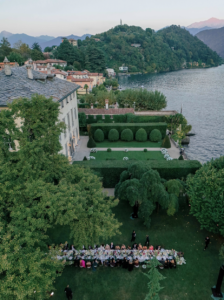
On Lake Como, for example, you will find some of Italy’s most evocative venues. Villa Balbiano is a perfect example of a historic residence able to combine architectural magnificence with contemporary hospitality, while Villa del Balbianello, with its spectacular position on the Lenno promontory, offers breathtaking views that have also served as the backdrop for major international film productions.
For those seeking more intimate yet equally refined atmospheres, Villa del Grumello and Villa Noseda offer compact spaces that are perfect for smaller celebrations, without giving up the charm of historic residences.
Urban and contemporary spaces
Cities offer interesting alternatives for those who want a wedding with a more modern character. In Milan, venues such as Via Stampa are the perfect synthesis of urban elegance and flexible spaces, ideal for those who want a contemporary wedding in the heart of the city.
For those seeking the solemnity of theatrical settings, the Sala Bianca del Teatro Sociale on Lake Como turns the wedding into a true theatrical experience, where every moment takes on a distinctive scenic dimension.
Exclusive destinations
The destination-wedding trend is now well established: getting married in dream locations makes it possible to turn the wedding into a complete experience for the couple and their closest guests.
Villa Astor in Sorrento perfectly embodies this spirit, offering the magic of the Amalfi Coast with the privacy of an exclusive residence. For those who dream of even more unique atmospheres, venues such as Cava Puglia in Ostuni allow you to celebrate in spectacular natural settings that become an integral part of the day’s storytelling.
The extended experience: multi-day weddings
More and more couples choose to extend the celebration over several days with pre- and post-ceremony events. A welcome dinner the evening before, a post-wedding brunch, organized activities for guests arriving from afar turn the wedding into a truly shared experience.
This format is especially appreciated for destination weddings, where guests have traveled specifically for the celebration and want to make the most of the time together. A versatile catering partner can support this approach with different proposals for each moment: from an informal welcome dinner to a relaxed brunch the next day, every occasion has its own character and its own needs.
The choice of venue directly influences catering possibilities: every space has its logistical characteristics, from available kitchens to access routes, from capacity to structural constraints. For this reason, it is essential that catering and venue work in synergy from the earliest planning stages.
Catering: the protagonist of the experience
If the venue is the frame, catering is the heart of the reception experience. It is not simply about feeding guests, but about creating authentic moments of sharing through food, service, and attention to detail.
Finding the right partner
Choosing the caterer is a strategic decision that goes far beyond simply evaluating the menu. A professional catering team understands the dynamics of the event, adapts to the rhythm of the day, and knows when to be present and when to remain discreet.
In the search for the ideal partner, a few elements are fundamental: the ability to listen and tailor proposals, specific experience in the wedding sector, flexibility in adapting to special requirements and logistical constraints, and transparency in communicating costs and included services.
References from other couples who have already used the service are a valuable resource, as is the opportunity to attend tastings that allow you to assess the quality and presentation of the dishes firsthand. A good indicator of a caterer’s professionalism is the ability to propose creative solutions even when faced with budget constraints or specific needs.
Building the perfect menu
The wedding menu must reflect the couple’s tastes while maintaining a balance that satisfies all guests. A few trends characterize contemporary couples’ gastronomic choices.
Seasonality has become a non-negotiable value: seasonal ingredients guarantee freshness, superior quality, and greater sustainability. A spring wedding will celebrate tender vegetables and the first flavors of the season, while an autumn wedding can play with pumpkins, mushrooms and chestnuts in preparations that evoke warmth and conviviality.
Stylistic coherence in the menu is replacing the “mixed” approach of the past: instead of alternating different cuisines, couples prefer to tell one unified culinary story. This may mean celebrating Italian regional tradition with dishes that highlight the territory, or choosing a specific international cuisine that holds special meaning for the couple.
Dietary inclusivity is no longer an add-on but an integrated element from the design stage: vegetarian, vegan, gluten-free, or other intolerance-friendly options must be conceived with the same care as traditional proposals, turning constraints into creative opportunities.
Moments and service formats
The reception is traditionally structured in several moments, each with its own character and dynamics.
The welcome aperitif is the first convivial moment after the ceremony, when guests begin to socialize while waiting for the banquet proper. Contemporary aperitifs have evolved into more elaborate experiences: not only classic cocktails and canapes, but true themed food stations that allow guests to taste different offerings while moving freely through the space.
Finger food has revolutionized the way we think about the aperitif. It is not only about practicality, but an intelligent response to the needs of a modern audience: it allows guests to taste multiple offerings without feeling heavy, encourages socializing and movement, and reduces waste. From a culinary standpoint, it offers the opportunity to create varied tasting journeys where six, eight, ten different bites tell a story through contrasting flavors, textures, and temperatures.
The main banquet can be served in different formats. Plated service remains the most elegant and formal choice, where each course is carefully presented directly to seated guests. Family-style service, with shared serving platters at the center of the table, creates a more convivial and informal atmosphere, particularly suited to weddings that focus on sharing.
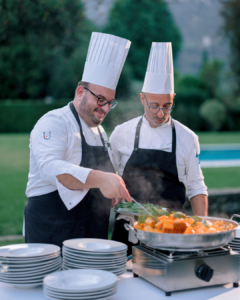
The buffet has undergone a major evolution: from a simple budget alternative it has become a sophisticated interactive experience. Specialized food stations – from fresh pasta prepared on the spot to grilled meat selections, through corners dedicated to cheeses or desserts – allow guests to build their own culinary experience while keeping quality high.
Beverages: a parallel narrative
The world of beverages deserves the same attention devoted to food. Contemporary mixology has taken on a central role in the reception experience, bringing the same artisanal care reserved for the kitchen.
Personalized signature cocktails for the couple create a memorable and distinctive element. Not simple standard drinks, but creations that tell the spouses’ story: a cocktail that evokes the place of the first meeting, one inspired by the engagement trip, one that celebrates family roots.
Wine selection should accompany and enhance the dishes served, not overpower them. A good caterer proposes thoughtful pairings, favoring whenever possible local producers and regional grape varieties that tell the region’s story through the glass.
There is growing attention to high-end non-alcoholic offerings: no longer simple alternatives, but standalone creations with the same complexity and care as traditional cocktails. Alcohol-free botanical spirits, flavored kombuchas, fruit-vinegar shrubs make it possible to offer every guest a sophisticated experience, regardless of personal choices.
The details that make the difference
Beyond food and beverages, it is the service details that transform a good reception into a memorable experience.
Dining-room service
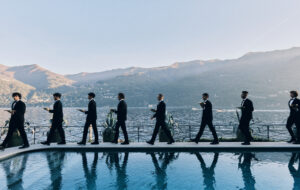
A professional front-of-house team is the invisible backbone of the experience: people who move naturally through the space, understand the rhythm of the event, know when to be present to address any need and when to disappear so as not to interfere with key moments.
The staff-to-guest ratio should be calibrated according to the chosen service format and the size of the event. For high-end plated service, the ideal is generally one waiter for every 12-15 guests, while for a buffet the ratio can be slightly broader.
Table setting
Mise en place is the first visual element that welcomes guests to their table. Contemporary trends favor understated elegance: natural palettes, noble materials that “feel” good to the touch such as raw linen and handcrafted ceramics, natural elements like foliage and seasonal blooms integrated with discretion.
A printed menu for each guest has come back into vogue as a touch of class: it allows guests to know the courses in advance, facilitates the management of intolerances and allergies, and becomes a small keepsake of the day when tastefully personalized.
Plating and presentation
In contemporary weddings, the aesthetics of food matter as much as taste. Each plate becomes a small work of art to be appreciated first with the eyes, then with the palate. Refined yet not contrived plating communicates care and professionalism, while the strategic use of color – particularly important when you want to underline a theme or the couple’s brand values – adds another layer of personalization.
Timing: when to book what
Planning a wedding requires organization and lead time. Catering is among the first services to book: experts recommend doing so at least 10-12 months in advance to secure the availability of your chosen supplier, especially for weddings in peak season (May-October).
The ideal timeline is as follows:
12-10 months before: research and select the venue and the caterer, attend tastings, sign preliminary contracts.
8-6 months before: define the final menu, choose front-of-house service, confirm all logistical details with the venue and the caterer.
3-2 months before: confirm the final guest count, communicate specific allergies and intolerances, define final details such as table setup and printed menus.
1 month before: final coordination meeting among all suppliers involved to synchronize timing and responsibilities.
Mistakes to avoid
A few common mistakes can compromise the reception experience:
Underestimating the importance of tastings: they are the only way to assess the quality and style of the catering in concrete terms. Do not limit yourself to photos; taste it directly.
Failing to communicate intolerances and allergies: even a single person with a severe allergy can turn a joyful moment into an emergency. Collect this information in advance and share it with the caterer.
Choosing the cheapest caterer without assessing experience: the initial savings can translate into poor service, stress, and general dissatisfaction. Catering is not the place to cut the budget excessively.
Ignoring the venue’s logistics: an inadequate kitchen or difficult access can compromise service quality. Make sure that catering and venue are compatible.
Not planning weather alternatives for outdoor events: even with the best planning, the weather can surprise you. A well-structured Plan B avoids panic and last-minute compromises.
A memory that lasts
The perfect reception is not the one with the most expensive menu or the most prestigious venue, but the one where every element works in harmony to create a moment of true sharing and celebration of love. In this context, the caterer is the strategic partner that turns the vision into reality, ensuring that every gastronomic detail leaves a positive and lasting memory for everyone involved.