The clinking of cups, the constant and enveloping chatter, the rumbling of the machine always running and that unmistakable, pungent, and homely smell of coffee. The bars that populate the streets of Italian cities, from metropolises to mountain villages, are all different and, at the same time, surprisingly similar. «The Italian bar is a land that belongs to no man and to everyone, halfway between free time and professional activity»; with his innate clarity, Italian writer and philosopher Umberto Eco was able to tell the exceptionality of these places that even today, in the digital age of uniformity, are custodians of one of the most authentic and long-lasting Italian experiences. With an uncertain etymology and remote origins, the bar as we know it has its roots in Ancient Rome’s “taberna”, one of the first restaurants accessible from the public streets that served food and drinks to travelers and foreigners. But it was only in the 16th century, with the siege of Vienna, that the Ottomans introduced the exciting, aromatic elixir to Europe, which in Italy, in the following centuries, reached its maximum diffusion and popularity.
From the First Italian Cafés to Espresso: Innovation and Design
It was 1720 when Caffè Florian, the first Italian café and the forerunner of the modern bar, opened in Venice, followed by Pedrocchi in Padua (1722) – known as the “café without doors” -, Gilli in Florence (1733), Caffè degli Specchi in Trieste (1837), Gambrinus in Naples (1860) and many others. A major part of the Italian cafés’ success is due to the revolutionary invention of a Turin entrepreneur, Angelo Moriondo, who in 1884 presented the world with the first espresso machine, capable of preparing 300 cups of coffee in an hour, compared to the five-minute wait required by old traditional coffee makers.
The real revolution, however, occurred in the twentieth century, between the two World Wars, when cafés were supplanted by the newborn concept of the bar, a more popular and democratic meeting place. While there is still a cloud of mystery surrounding its name – some say it derives from the English word “barrier” that in the taverns of the South American colonies divided the area where alcohol was served from the rest of the pub, according to others it stems from the brass bars that characterized the first Italian bar counters, while for others it is an acronym for “Banco A Ristoro” – the reasons for its prosperity in Italy and abroad are well known. On the one hand, its aesthetic and functional conformation that over the course of the twentieth century closely intertwined several times with the history of industrial and interior design and with the most innovative research in terms of materials and new technologies; an example of this is the Italian company IFI that, in 1968, launched the first industrial bar counter, which with compactness and modularity guaranteed maximum speed and efficiency of performance. On the other hand, all those gestures and habits that have consolidated over the decades have become a symbol of Italianness in the world: that quick hand gesture that means «An espresso, please», the formal greetings with passing customers or the long chats with lifelong friends. Indeed, Italian bars have long fulfilled a social, aggregating, recreational and even cultural role, if we think about the Bar Jamaica, which in Milan was home to illustrious intellectuals and artists such as Antonio Recalcati, Ugo Mulas and Allen Ginsberg, or the Rosati, the renowned bar located in Rome’s historic center where, in the second post-war, regular customers used to have their espresso shoulder to shoulder with prominent figures from cinema and literature, such as Alberto Moravia, Elsa Morante, Federico Fellini, Pier Paolo Pasolini and Italo Calvino.
But it is outside the big cities where the so-called “bar di paese” (Italian for local bars) and “neighborhood bars” have had a greater impact on local communities. Starting in the 1960s, when television was still a luxury reserved for a few wealthy Italian families, bars used to broadcast football matches – the famous Bar-Sport – and other entertainment programs, while customers exchanged newspapers and magazines of all kinds, played cards, and discussed work and politics around the tables. It was precisely the sense of community and the homely feelings conveyed by Italian bars that inspired the American entrepreneur Howard Schultz who, with his coffee shops chain Starbucks, aimed to export this convivial and relaxed atmosphere throughout the world. The simple, urban life that took place day by day inside bars scattered all over Italy has become truly iconic thanks to the contribution of films such as Amici Miei (1975) by Monicelli with the unforgettable Bar Necchi, and of glamorous and folkloristic locations such as the world-famous Piazzetta in Capri, also known as “the living room of the world” due to its colorful clientele: princes of Northern kingdoms, Italian and international actors, billionaires and many ordinary people. Even renowned photographers such as Ellior Erwitt, Robert Capa and Ferdinando Scianna fell for the charm of these places teeming with life and transformed bar stories into authorial shots, many of which have been collected in the exhibition Bar Stories on Camera, created by Camera Torino in collaboration with Magnum Photos and Galleria Campari. Over a century of Italian history, art and culture are condensed in these shots: from the hectic moments following the referendum for the approval of the divorce law in 1974 to the iconic Art Nouveau style of the Caffè Camparino in Galleria Vittorio Emanuele II in Milan, portrayed by Bruno Barbey, and the original sketches created by the master of Futurism Fortunato Depero for Campari’s menus and advertising campaigns.
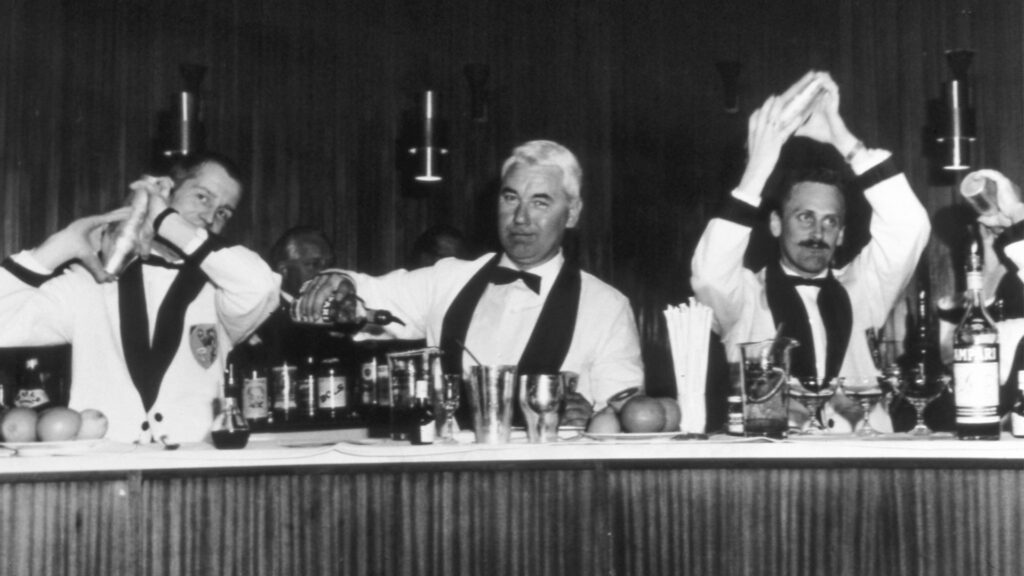
Not only do Italian bars represent a piece of recent history of our country, but they have also partly shaped its consumption habits from breakfast to aperitif, another all-Italian tradition supported by the success of several Made-in-Italy spirits, first and foremost Campari, Aperol and Cinzano vermouth. And so, the bar counters have also become theaters of true alchemic revolutions in the world of mixology, from the Bellini invented by the founder of Harry’s Bar in Venice to the more recent Negroni Sbagliato of Milan’s Bar Basso. Guardians of customs, legacies and recipes, Italian bars are today the discreet protagonists of a new type of social content with a deliberately artisanal style created by influencers and photographers, mostly foreign, who travel around Italy in search of the most authentic witnesses of this enduring tradition, certainly changed under the weight of passing trends and international influences, but – luckily – still very much present in every Italian’s life.